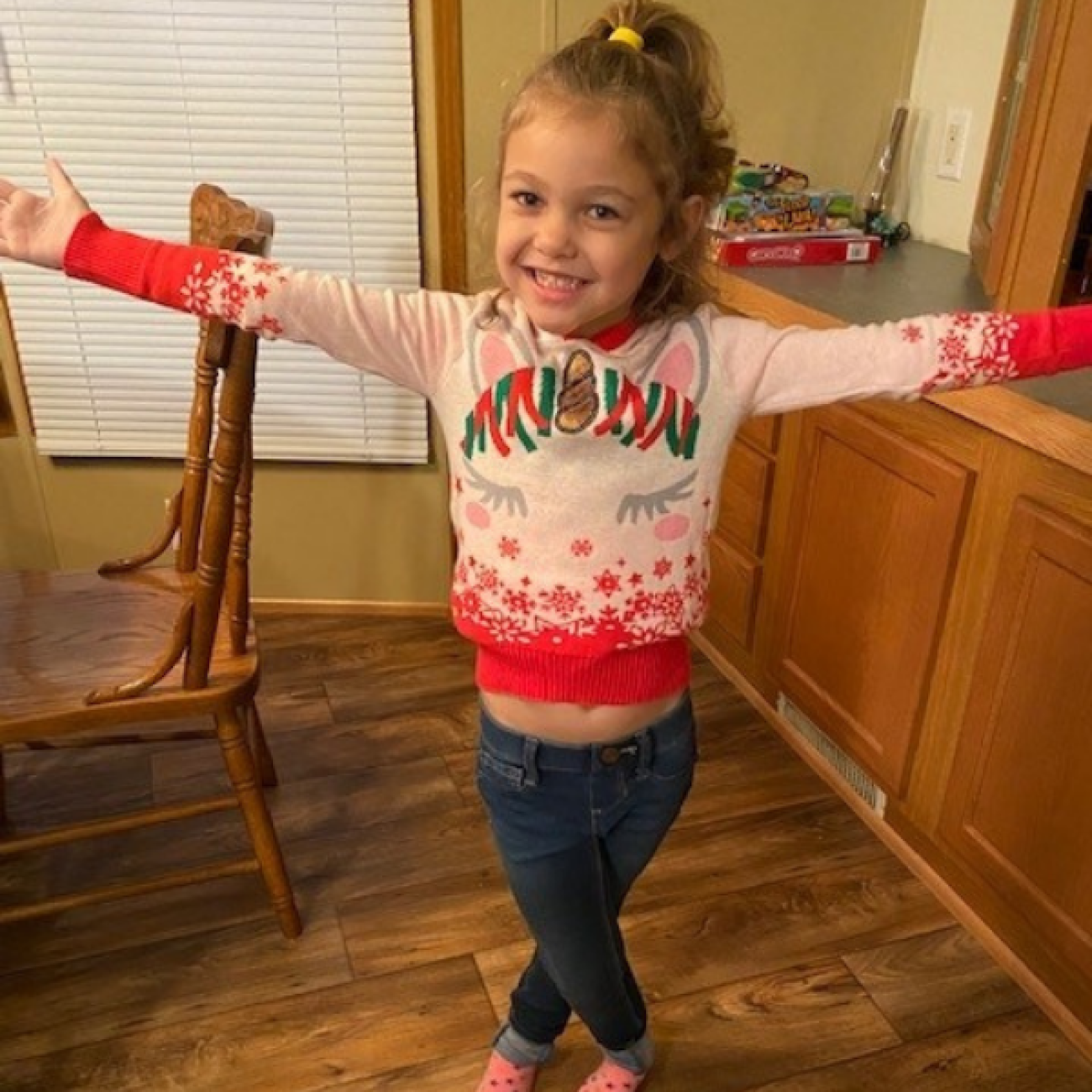
Alayna is doing all the normal activities for a child her age. Learning to read, making many friends, and taking gymnastics are parts of ordinary life for kindergarteners. She’s looking forward to soccer and more sports when pandemic life eases. Few signs remain that she battled aplastic anemia aplastic anemia: (ay-PLASS-tik uh-NEE_mee-uh) A rare and serious condition in which the bone marrow fails to make enough blood cells - red blood cells, white blood cells, and platelets. The term aplastic is a Greek word meaning not to form. Anemia is a condition that happens when red blood cell count is low. Most… two years ago.
Yet Alayna’s mom still worries. She asks, “Where did that bruise come from?” each time she notices even one small bruise. Parents of bone marrow failure bone marrow failure: A condition that occurs when the bone marrow stops making enough healthy blood cells. The most common of these rare diseases are aplastic anemia, myelodysplastic syndromes (MDS) and paroxysmal nocturnal hemoglobinuria (PNH). Bone marrow failure can be acquired (begin any time in life) or can be… patients understand this worry; unexplained bruising and fatigue were Alayna’s first symptoms of aplastic anemia. (Read her first story here: https://www.aamds.org/patient-chronicles/ashley-numbers.) At nearly two years post-transplant, Ashley’s concerns still surface, remembering the risks at diagnosis.
When Ashley now looks at their photo albums, she doesn’t even recognize the child in treatment. “Alayna looks so different” now, she says. She feels lucky and grateful that the treatment worked for her.
Since Alayna received her “Wish” of a camper from the Make-A-Wish Foundation, the family took camping trips. They recently went to Jellystone Park, a real treat for Alayna and her donor-hero brother. Her happiness is as contagious as the photos show.
Ashley only sees her daughter worry is when they get ready for regular lab testing. Understandably, the little girl isn’t eager to be poked and prodded. Ashley has found that putting in some preparation beforehand helps to manage her fears.
Now, in retrospect, Ashley has these words to parents facing their child’s aplastic anemia treatment: “Never give up hope," which she used as the title for her book. Ashley says that it’s okay to have the real emotions of fear and anger, but don’t let it interfere with the hope your child needs from you. If you are a pediatric parent and you’d like to chat with her, please send an email to help@aamds.org and we’ll make the connection.
We’re all cheering for this family!