I’m 31-years-old, and I was diagnosed with PNH in 2009 when I was 24.
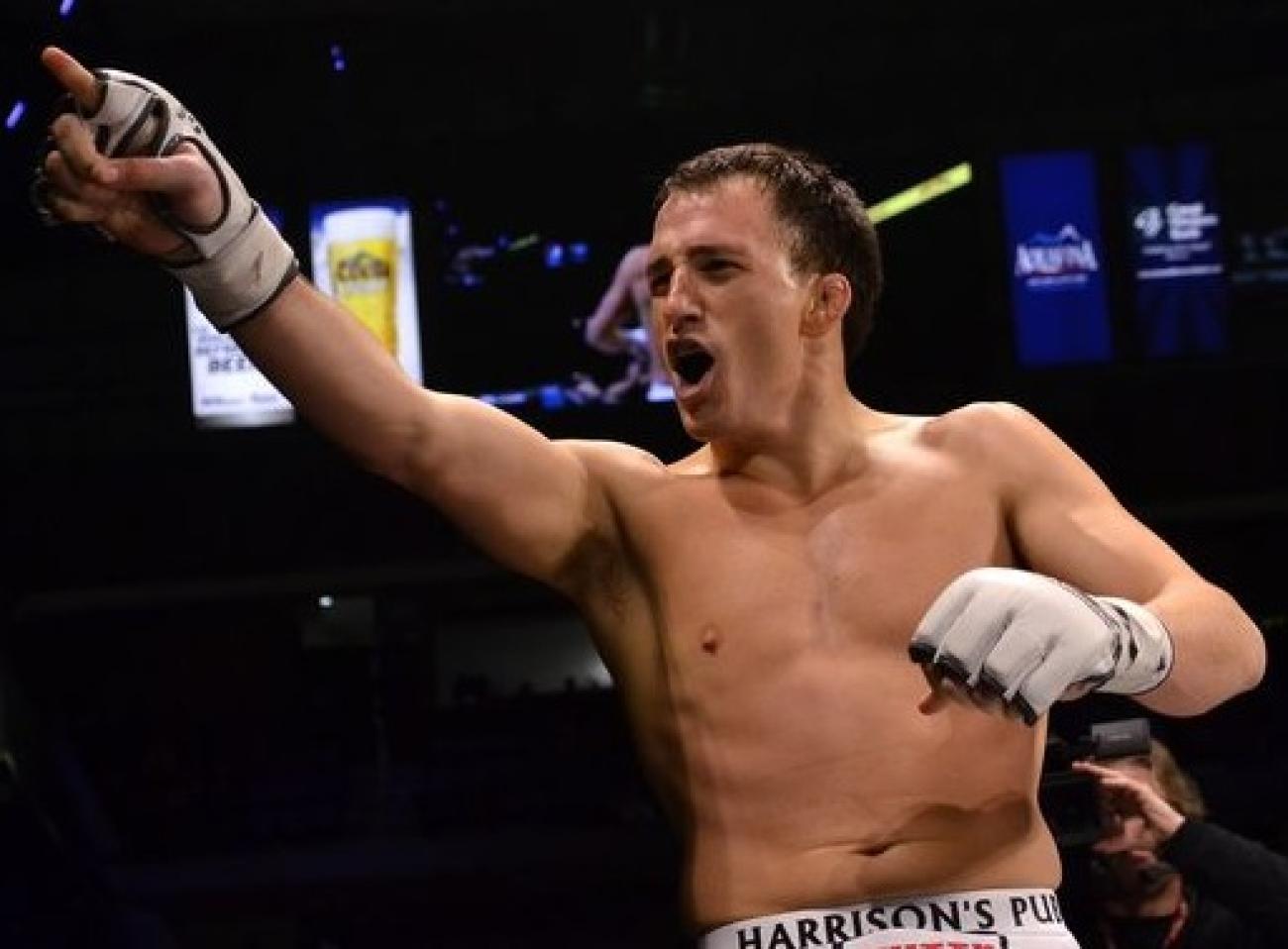
I am generally athletic, and in college I was a wrestler. I knew what I could expect when training, competing, and recovering from competition. I transitioned from wresting to mixed martial arts (MMA) in 2008. Naturally, when I started that, I wanted to be sure that my training and recovery were the best they could be.
I was 9-0 as a Professional in MMA and had my tenth fight in July 2009. About halfway through training for this fight, I started feeling really sluggish and tired. My body wasn’t recovering in the usual way, and I had back pain and abdominal pain that went on longer than it should have. I didn’t think too much of it at first, but still trained hard, made the weight, competed and eventually won the fight. I wasn’t recovering like before and thought it was something I was doing wrong – maybe somehow not training hard enough.
I went to my general doctor, who found my blood counts to be all out of whack and then I was sent right to a hematologist hematologist: (hee-muh-TOL-uh-jist) A doctor who specializes in treating blood diseases and disorders of blood producing organs. in Kearney, NE. She ran some tests including a flow cytometry flow cytometry: (sy-TOM-uh-tree) A laboratory test that gives information about cells, such as size, shape, and percentage of live cells. Flow cytometry is the test doctors use to see if there are any proteins missing from the surface of blood cells. It is the standard test for confirming a diagnosis of paroxysmal… test for PNH, which was sent to the Mayo clinic for evaluation. It came back positive. This hematologist knew I needed to find an expert and helped me find one. She also knew I had to learn everything I could about my condition.
Even though I was still in something of a denial phase, I did my research and found AAMDSIF and the PNH Foundation. And I found an expert -- after the first consultation, I knew I was facing something significant and could no longer be in denial, It was reassuring to find an expert.
Right away, my hematologist knew of the clotting risk with PNH, so I was put on Warfarin Warfarin: It is used to prevent blood clots from forming. Warfarin is a tablet that is taken by mouth. , a blood thinner blood thinner: A medicine used to stop blood clots from forming. Blood thinners can be used to treat or prevent clots. Some common blood thinners are enoxaprin (Lovenox), heparin (Calciparine or Liquaemin), and warfarin (Coumadin). Also called and anticoagulant or thrombopoiesis inhibitor. . I went back to my specialist and this wasn’t long after eculizumab eculizumab: Eculizumab (Soliris ®) is given as an IV into a vein at the doctor’s office or at a special center. The procedure usually takes about 35 minutes. You will probably get an IV once a week for the first 4 weeks. Starting in the 5th week, you will get a slightly higher dose of Soliris every 2 weeks. … (Soliris®) had been approved. I got my first infusion in March 24, 2010 and have been on it ever since. I have a significant PNH clone clone: To make copies. Bone marrow stem cells clone themselves all the time. The cloned stem cells eventually become mature blood cells that leave the bone marrow and enter the bloodstream. , but the drug is working well. So it’s under control for the most part – at least my team of doctors think so.
So it was ok for me to go back to MMA and start competing again -- I was away from it for about a year. My platelet platelet: The smallest type of blood cell. Platelets help the blood to clot and stop bleeding. Also called a thrombocyte. count had not been that bad… it was the hemolysis hemolysis: (hi-MOL-uh-suss) The destruction of red blood cells. , resulting fatigue that had been the problem.
For people who have recently learned they have PNH – I encourage them to try and do what I did. Get a specialist, and learn to be your own best advocate and speak up when you need something. Don’t let this medical challenge completely take over your life – things are going to be different, but still try to live in the most normal way you can. Everyone experiences adversity – so even with what you are going through, try to be a source of support for others, no matter what their challenges are. I think some of what I learned as a wrestling team captain and later as an assistant coach helped developed some of the personal skills I am using to live with PNH. As a team, we had upsets and defeats that were hard to face, but you dealt with them and lived to fight and compete another day. I used these same attitudes to deal with PNH.